Automated SEO Tools for Content Creators in 2026
Editorial Team··10 min read

Table of Contents
- Why Content Creators Need Automated SEO Tools
- Quick Comparison: Best Automated SEO Tools
- 1. Aleyo: All-in-One Site Building and SEO Automation
- 2. Surfer SEO: Real-Time Content Optimisation
- 3. Semrush: Complete Marketing and Keyword Suite
- 4. Ahrefs: Backlink Analysis and Site Audits
- 5. Yoast SEO: WordPress Integration for Beginners
- Building an AI Content Automation Workflow for Small Businesses
- Frequently Asked Questions
Last Updated: 5 September 2026
Automated SEO tools for content creators have shifted from a nice-to-have to the backbone of a sustainable publishing strategy. With search engines rewarding consistent, well-optimised output, manually researching keywords, editing drafts, and auditing technical health for every post simply does not scale. This guide from Aleyo examines the platforms that genuinely reduce that workload, comparing their strengths for solo bloggers, in-house teams, and agencies.
The goal here is practical: understand which automated SEO tools actually save time without sacrificing content quality, and how to fit them into a repeatable workflow. Below, we break down the top contenders, starting with Aleyo, then covering Surfer SEO, Semrush, Ahrefs, and Yoast SEO.
Why Content Creators Need Automated SEO Tools
The biggest mistake creators make is treating SEO as an afterthought. Publishing a great article and then hoping Google finds it leaves rankings to chance. Automated SEO tools remove that guesswork by handling the repetitive tasks: keyword research, on-page optimisation checks, technical audits, and rank tracking.
For a small business owner or solo creator, time is the scarcest resource. A common approach is to spend hours each week on manual analysis that a tool could complete in minutes. These platforms also flag issues before they hurt you, such as missing meta descriptions, slow page speeds, or broken internal links. The result is a consistent baseline of technical health that lets you focus on the writing itself.

Quick Comparison: Best Automated SEO Tools
Choosing the right platform depends on your workflow and budget. Some tools excel at on-page scoring, while others dominate link analysis or site building. The table below summarises the main options for content creators in 2026.
| Tool | Starting Price | Best For | Standout Feature |
|---|---|---|---|
| Aleyo | See website | Site building and SEO automation | Four specialist AI agents in sequence |
| Surfer SEO | £75/month | Real-time content optimisation | Live SERP scoring while writing |
| Semrush | £108.33/month | Complete marketing suite | Extensive keyword database |
| Ahrefs | £79/month | Backlink and technical audits | Industry-leading link index |
| Yoast SEO | £9.90/month | WordPress beginners | Automated technical configuration |
Pricing for Aleyo depends on the plan you choose, so check the website for current tiers. For the others, entry prices give a sense of the investment required, though most offer trials or limited free versions.
1. Aleyo: All-in-One Site Building and SEO Automation
Our top pick for creators who want more than a plugin is Aleyo. It simplifies the entire process, from building the site to monitoring its SEO health. Instead of stitching together a website builder, a content tool, and an analytics dashboard, Aleyo combines them in one live workspace.
The platform uses four specialist AI agents, Piper, Delta, Wren, and Dex, working in sequence to plan, design, and engineer your site. You can edit content word-by-word directly on the canvas, and integrated modules handle blogging, branding, and e-commerce. For SEO, Aleyo provides real-time traffic, conversion, and SEO health monitoring, so you see the impact of your content as it happens. New users get 60 free credits on sign-up to test the workflow.
What most guides miss is that automation is only useful when it connects to your actual site. Aleyo closes that loop by generating brand assets and marketing content in the same environment where your site lives.
2. Surfer SEO: Real-Time Content Optimisation
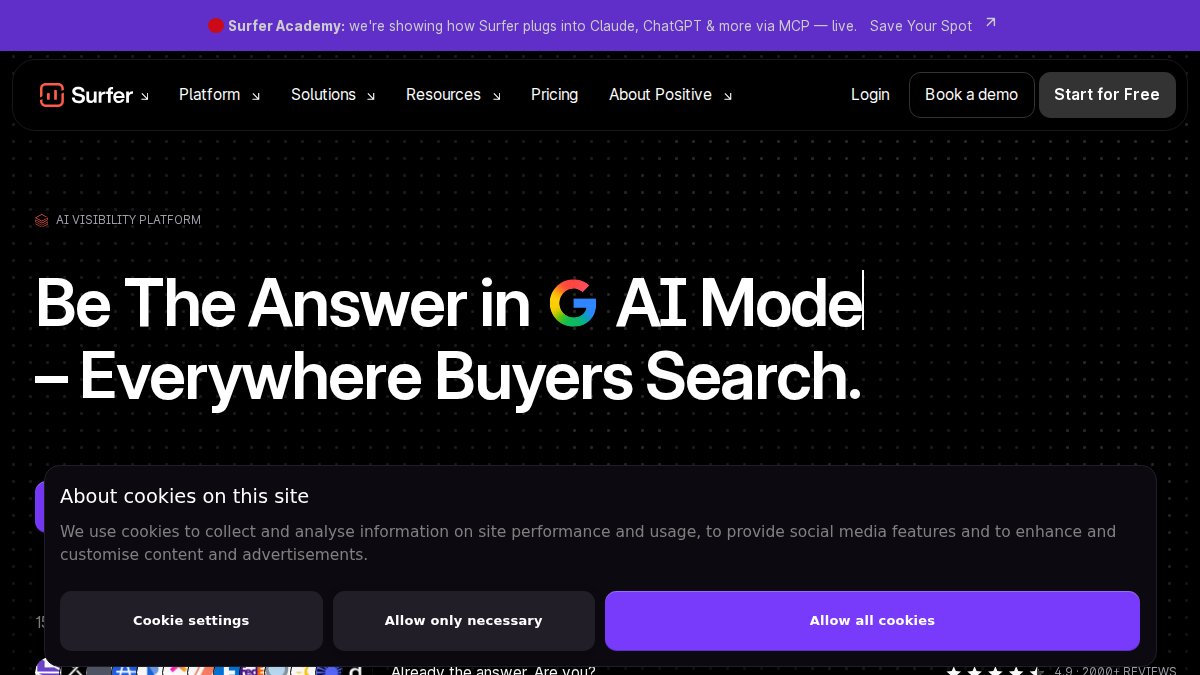
Surfer SEO takes a different approach: it analyses the search engine results pages for your target keyword and gives you a live content score as you write. This is an seo content optimisation tool designed for creators who already have a publishing platform and need data-backed guidance on structure, word count, and keyword usage.
The Content Editor integrates with Google Docs and WordPress, offering real-time feedback while you draft. It also includes AI-driven keyword research and clustering, plus a SERP analyser for benchmarking competitor content. For a content team producing regular articles, this reduces the back-and-forth of guesswork.
The one drawback is the risk of over-optimisation. Following the score too rigidly can produce content that feels mechanical, so use it as a guide rather than gospel. It is best for creators who understand their audience and want optimisation support, not a replacement for editorial judgement.
3. Semrush: Complete Marketing and Keyword Suite
Semrush is the heavyweight option, offering a comprehensive toolkit that extends beyond content optimisation into competitor monitoring, rank tracking, and backlink analysis. For marketing agency managers overseeing multiple clients, the breadth of data in one place justifies the higher entry price of £108.33 per month.
Its on-page SEO checker provides actionable recommendations, while the content marketing toolkit helps plan and track editorial calendars. The extensive database for keyword and competitor research means you can identify opportunities that smaller tools miss. Semrush is an all-in-one solution that reduces the need for several separate subscriptions.
That breadth comes with a learning curve. New users often find the interface overwhelming, and the cost is significant for a solo creator. It is best suited to agencies and established businesses that need depth across the entire marketing funnel, not just on-page optimisation.

4. Ahrefs: Backlink Analysis and Site Audits
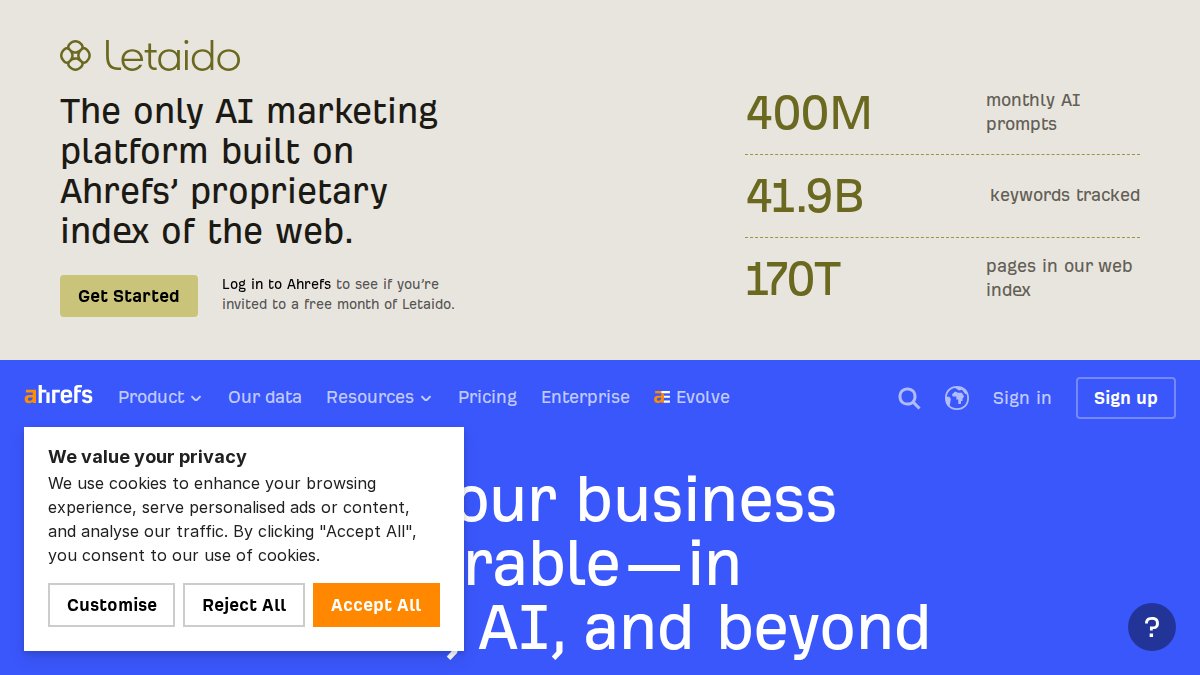
If your content strategy relies on link building or you manage sites where technical health is a concern, Ahrefs is the benchmark. Its Site Explorer offers the industry's most extensive backlink index, while the Site Audit tool crawls your pages to flag technical issues that hurt rankings.
Keywords Explorer provides accurate search volume and difficulty metrics, and Content Explorer helps you find top-performing pieces in any niche. For creators focused on building authority through guest posts and digital PR, Ahrefs is the reference tool.
The trade-off is a steep learning curve and a starting price of £79 per month. Beginners may find the depth of data difficult to interpret, but for SEO professionals, the accuracy of Ahrefs' metrics is unmatched. It is less about content creation and more about understanding the competitive landscape and fixing what holds your site back.
5. Yoast SEO: WordPress Integration for Beginners
For WordPress users who want a simple, integrated solution, Yoast SEO remains the most accessible entry point. At £9.90 per month, it is the most affordable paid option here, and the free tier covers the essentials. The plugin provides real-time content analysis for readability and SEO, plus automated technical configuration including sitemaps, canonicals, and schema markup.
Yoast also offers internal linking suggestions, which many creators overlook. Its main limitation is that it is confined to the WordPress ecosystem, so it cannot help with broader competitive research or rank tracking across multiple platforms. It is best for bloggers and small businesses that publish on WordPress and want a straightforward way to follow best practices for ai-generated content without leaving the editor.
Building an AI Content Automation Workflow for Small Businesses
The real value of these tools emerges when you connect them into a single ai content automation workflow for small businesses. A practical sequence looks like this: use Semrush or Ahrefs to identify a keyword with realistic competition, draft the article with AI assistance, run it through Surfer SEO for on-page optimisation, and publish on a site built with Aleyo that monitors the results.
This workflow removes the manual hand-offs that slow teams down. Keyword research feeds directly into content briefs, optimisation scores guide edits before publishing, and automated site audits catch technical issues without a developer. For a small business, this means a small team can produce content that competes with larger publishers.
The critical step is the human review. Automated tools handle the data, but they cannot judge whether a piece genuinely answers the reader's question. Review every draft for accuracy, add original insights, and ensure the content reflects your brand's voice before hitting publish.
Building a sustainable content pipeline in 2026 means letting software handle the repetitive SEO work while you focus on what only you can write. The challenge is stitching together research, drafting, optimisation, and technical monitoring into one smooth process. Aleyo simplifies that by combining automated site building with real-time SEO health monitoring, content generation, and lead capture in a single live workspace. Start building with Aleyo and see how much faster your content workflow becomes.
Frequently Asked Questions
Can AI tools fully automate SEO for content creators?
No tool can fully automate SEO because search engines reward originality and genuine user value. Automated SEO tools handle the repetitive groundwork: keyword research, content briefs, technical audits and rank tracking. You still need to review AI drafts, add original insight and ensure the content matches your audience's intent. The best approach combines automation for efficiency with human oversight for quality and brand voice.
What should content creators look for in an SEO automation platform?
Prioritise tools that integrate with your existing workflow and offer real-time feedback rather than batch reports. Look for accurate keyword data, content scoring that updates as you write, and clear technical SEO guidance such as sitemaps and schema markup. For small businesses, an ai content automation workflow matters more than raw feature count. Check that the platform can scale with your output and offers support when you get stuck.
What are the risks of using automated SEO tools for content?
The main risks are over-optimisation and generic output. Tools like Surfer SEO can encourage keyword stuffing if you follow every suggestion blindly. AI-generated content can also read as repetitive and harm your credibility. Google's spam policies target scaled content abuse, so publish AI drafts only after meaningful editing. Use automation for research and structure, then add your own examples and opinions to keep the content genuinely useful.
Are there free automated SEO tools for small businesses?
Yes, several options offer free tiers that suit small businesses. Yoast SEO has a free WordPress plugin covering core on-page optimisation. Semrush includes limited free daily searches for keyword research. These free tiers help you test features before committing. For a fully automated workflow, you may need to budget for paid plans, so compare pricing against the time you save.
This article was written using GrandRanker
FAQs
- A: No tool can fully automate SEO because search engines reward originality and genuine user value. Automated SEO tools handle the repetitive groundwork: keyword research, content briefs, technical audits and rank tracking. You still need to review AI drafts, add original insight and ensure the content matches your audience's intent. The best approach combines automation for efficiency with human oversight for quality and brand voice.
- A: Prioritise tools that integrate with your existing workflow and offer real-time feedback rather than batch reports. Look for accurate keyword data, content scoring that updates as you write, and clear technical SEO guidance such as sitemaps and schema markup. For small businesses, an ai content automation workflow matters more than raw feature count. Check that the platform can scale with your output and offers support when you get stuck.
- A: The main risks are over-optimisation and generic output. Tools like Surfer SEO can encourage keyword stuffing if you follow every suggestion blindly. AI-generated content can also read as repetitive and harm your credibility. Google's spam policies target scaled content abuse, so publish AI drafts only after meaningful editing. Use automation for research and structure, then add your own examples and opinions to keep the content genuinely useful.
- A: Yes, several options offer free tiers that suit small businesses. Yoast SEO has a free WordPress plugin covering core on-page optimisation. Semrush includes limited free daily searches for keyword research. These free tiers help you test features before committing. For a fully automated workflow, you may need to budget for paid plans, so compare pricing against the time you save.